A quiet but meaningful shift is happening in how a portion of Dubai’s residents choose to live. Co-living developments private bedrooms within shared, fully serviced buildings have moved from a niche product aimed at backpackers to a mainstream housing option for working professionals, remote employees, and longer-stay expats. Build-to-rent, where entire residential buildings are designed and managed specifically for tenants rather than individual owners, is following a similar trajectory.
Both models solve a specific problem: flexible, fully managed housing in a city where lease terms, agent fees, and the cost of furnishing an apartment can make a conventional rental feel like a significant commitment. For a city where expats make up over 80 per cent of the population, according to property research cited by Zamelect Properties, the appetite for housing that matches an internationally mobile lifestyle was always going to be considerable.
What these living arrangements do not solve and were never designed to is storage. A co-living room in JLT or Dubai Marina comes with a bed, a wardrobe, and shared common areas. It does not come with space for a bicycle, a suitcase collection, sports equipment, or the belongings that accumulate over years of Dubai life but do not belong in a 20-square-metre room.
Why co-living residents carry more than their rooms can hold

The assumption behind co-living is that residents travel light. Some do. Many do not. A professional who has lived in Dubai for three or four years and moved into a co-living arrangement to save on rent or simplify their life still owns the things they accumulated during a previous lease. A hobby photographer has camera equipment. A runner has gear. Someone who spent five years in a villa before downsizing has furniture they are not ready to sell.
The co-living room handles the daily essentials well. It is the secondary layer — the things that matter but do not need to be accessed every day where the model creates a gap. Personal storage options fill that gap cleanly, functioning as the off-site extension of a living situation that was designed for simplicity rather than volume.
The build-to-rent dynamic
Build-to-rent properties in Dubai occupy a different price point from co-living but share one characteristic: the units are professionally managed, often furnished, and optimized for tenancy rather than ownership. Residents in build-to-rent buildings in communities like Dubai Marina, Business Bay, or along the Jumeirah Beach Road corridor are typically paying a premium for the management layer maintenance, community amenities, concierge rather than for square footage.
The trade-off is space. A well-managed 650-square-foot one-bedroom in a build-to-rent building is a good product. It is not a product designed to absorb the accumulated possessions of someone who has been in Dubai for several years, or someone arriving from a larger home in another country with belongings they intend to keep.
Expat storage solutions exist precisely for this transition point: arriving into a smaller, managed property with more belongings than the unit was designed to hold, and needing somewhere reliable for the rest.
Where the market is heading
According to The National, Cushman and Wakefield Core’s head of research describes the Dubai residential market as transitioning into a more balanced phase following several years of exceptional growth. Within that moderation, demand for smaller, flexible, professionally managed units is expected to hold.
That means the storage gap these residents experience is not a transitional issue. It is a structural one, and it is unlikely to resolve itself as the product category grows.
The Inventory Separation Model
The most practical framework for co-living and build-to-rent residents managing belongings across a smaller footprint is what this post terms the Inventory Separation Model. It treats the residential unit and external storage not as primary and overflow, but as two complementary environments with different functions.
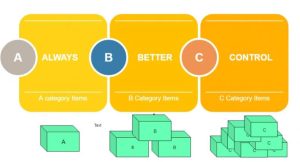
The residential unit holds daily-use items: clothes in rotation, work equipment, personal care items, the things touched every day or every week. It is sized and furnished for this purpose.
External storage holds infrequently accessed but retained items: seasonal clothing, sports and leisure equipment, sentimental items, professional materials not in daily use, luggage, and anything belonging to a previous living situation that has not yet been permanently resolved. These items are retrievable when needed. They are not present when they are not.
The separation is not just logistical. It changes how the residential unit feels. A co-living room or a compact build-to-rent apartment that contains only what is actually used reads as a functional, considered space. The same room carrying an extra layer of stored-but-unused items reads as cramped, regardless of its actual square footage.
Seasonal storage serves the rotation function within this model: winter items leave in April, summer items return in October, and the unit carries only what the current season requires.
The climate consideration
Dubai’s summer creates a specific complication for residents in co-living and build-to-rent properties. Many of these buildings are managed for energy efficiency, which can mean variable cooling in non-living areas, reduced airflow in shared storage spaces, and limited climate control in any communal areas where residents might store additional items.
Storing leather goods, quality textiles, electronics, or anything sensitive to temperature and humidity in a co-living building’s shared areas through a Dubai summer is a risk most residents do not assess until something has already been damaged. Climate-controlled storage holds these items at a consistent temperature and humidity year-round, protecting them independently of whatever the building’s management does with its own shared spaces.
This matters more in the June-to-September window, when residents who travel frequently may leave items unattended in a building that is running reduced services.
Practical steps for residents in managed properties
For co-living and build-to-rent residents currently managing more belongings than their unit comfortably holds, a few decisions made early simplify the rest of the tenancy:
- Identify which belongings are accessed at least once a month. These stay in the unit.
- Identify seasonal items winter gear, holiday decorations, bulky sports equipment and move them off-site before they start occupying floor space.
- Protect anything valuable or climate-sensitive before summer begins. Do not rely on building storage areas for this.
- For residents considering a move between co-living properties or into a different building, short-term storage bridges the gap between leases without requiring everything to be moved simultaneously.
- Review storage contents every three to four months. Items that have been absent long enough to confirm they are not needed become easier to donate or sell.
A model of living that works better with an external layer
Co-living and build-to-rent have succeeded in Dubai because they match how a mobile, professionally active population actually wants to live: without the friction of long leases, unfurnished apartments, and the administrative weight of a conventional tenancy. They are genuinely good products for the right resident.
They are not, and were not designed to be, complete solutions for the full inventory of a life. The residents who get the most out of these living arrangements tend to be the ones who have resolved that distinction clearly the unit does what it was designed to do, and an accessible storage facility near communities like Jumeirah and surrounding areas does the rest.
If you are currently in a co-living or build-to-rent property and want to work out what storage arrangement makes sense for your situation, request a quote and the team can help you find the right fit.