A school corridor in late June looks nothing like it does in September. Desks get stacked, AV carts get wheeled into storerooms that are already full, and somewhere in a back office a filing cabinet of admission records competes for space with last year’s sports day trophies. Multiply that by every classroom, every department, and every term break, and the storage problem facing Dubai’s schools becomes obvious fast.
Dubai now has 227 private schools educating more than 387,000 students from 185 nationalities, according to Gulf News, and the sector isn’t slowing down. Six new schools opened during the current academic year, KHDA is reviewing more than 30 applications for new schools, and enrolment grew by 6% in 2025 alone. Every one of those institutions is sitting on furniture, equipment, and archives that have to go somewhere between terms.
Most schools solve this the way most growing organizations solve space problems: badly, and only when a storeroom is visibly overflowing.
The Asset Load Nobody Budgets For
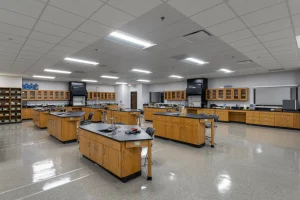
A school isn’t just classrooms. It’s science lab equipment that only comes out for certain units, sports kits that cycle in and out by season, AV systems that get swapped between events, and administrative archives that legally have to exist somewhere even though nobody opens them for years.
Add furniture. A single classroom refresh, common in schools going through KHDA-linked quality improvements or curriculum changes, can generate dozens of desks and chairs that don’t fit the new layout but aren’t ready to be discarded. Multiply that across a campus with 20, 40, or 80 classrooms, and the volume becomes a genuine facilities problem rather than a minor inconvenience.
Schools in fast-growing areas like Dubai Knowledge Park and Al Barsha, where new campuses have opened to meet exactly the enrolment growth KHDA has been tracking, feel this most acutely. New buildings are usually designed around teaching space, not storage, which means the storage problem starts on day one rather than building up slowly over years.
Why the Term Break Is the Wrong Time to Improvise
Summer closure looks like an opportunity. Six to eight weeks with no students on site, plenty of time to sort through everything. In practice, most facilities teams spend that window on maintenance, repainting, and system upgrades, leaving storage decisions to whoever has a spare afternoon.
That’s how storerooms end up permanently full of things nobody has looked at in three years, sitting next to the equipment that’s actually needed for next term. Finding a specific box of exam archives or a particular set of lab equipment in September becomes a genuine search exercise, not a five-minute task.
The Term-Break Asset Cycle
Schools that manage this well tend to work from a structure rather than reacting each summer. The Term-Break Asset Cycle maps storage decisions to three points in the academic calendar rather than treating summer as the only window:
- Mid-year break: A short check-in point. Seasonal sports equipment, event materials from the first half of the year, and anything used once a term goes into short-term storage rather than sitting in a corridor for six months.
- Summer closure: The major reset. Furniture being retired or replaced, full-year archives that need to move into long-term storage, and any equipment not needed until the new term starts all get sorted here, with enough lead time to actually plan the move rather than rush it in the final week.
- Pre-term reactivation: Everything needed for day one gets pulled back and confirmed in place before students return, rather than discovered missing during the first week of term.
Treating these as three distinct, planned events rather than one chaotic summer scramble is what separates schools with organized facilities from ones where every storeroom is a mystery.
Where Institutions Get This Wrong

A few patterns show up repeatedly across schools trying to manage this internally:
- Archives and active-use equipment get stored in the same space, so retrieving either means digging through the other.
- Furniture that’s been “temporarily” set aside for a full academic year, because nobody made a decision about it.
- Document archives kept in non-climate-controlled rooms, which is a real risk in Dubai’s heat and humidity for anything paper-based.
- No inventory of what’s actually in a storeroom, so decisions get made from memory rather than an accurate picture.
- Facilities staff spending hours during term time on storage logistics that could have been resolved during a break with proper planning.
Quick Wins for Facilities Teams
A handful of changes make the next academic year noticeably smoother:
- Separate archival storage from active equipment storage entirely, so retrieving one never means disturbing the other.
- Use climate-controlled storage for anything paper-based or electronic, since Dubai summers can damage both if left in an uncooled space over the break.
- Build the mid-year and summer storage moves into the facilities calendar in advance, rather than scheduling them reactively once storerooms are already full.
- Keep a basic inventory log of what’s in offsite storage and when it was last accessed, so nothing sits forgotten for years.
- Plan the pre-term reactivation with enough lead time that equipment is confirmed back on site before the first day of school, not during it.
Why Offsite Storage Changes the Equation
Bringing in dedicated commercial storage removes the guesswork from all three points in the cycle. Instead of cramming another year’s worth of furniture and archives into an already full storeroom, institutions get space that scales with actual need, with proper climate control for anything sensitive to Dubai’s summer heat.
For schools and training centers near Dubai Knowledge Park, storage built for education and startup clients in the area means shorter transport times when equipment needs to move between campus and storage during a busy term-break window. Archive-heavy institutions, meanwhile, benefit from dedicated document archive storage that keeps years of records secure and retrievable without eating into classroom or office space that’s needed for teaching.
The schools managing growth well right now aren’t the ones with the most storage space on campus. They’re the ones that stopped trying to fit everything into campus storage in the first place, and built a cycle for what leaves the building, what comes back, and when.
If your institution is heading into another term-break storage scramble, it’s worth requesting a quote before the storerooms fill up again.