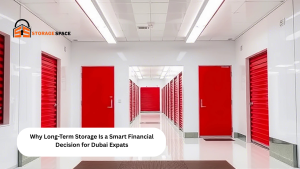
You’ve been in Dubai for three years now, and your rent has gone up twice. Somewhere between the first apartment and this one, you kept upgrading to a bigger unit every time the boxes and spare furniture stopped fitting, and each upgrade cost you thousands of dirhams a year you never actually needed to spend on square footage.
This is the quiet financial pattern most Dubai expats fall into without ever running the numbers. A one-bedroom becomes a two-bedroom not because life changed, but because the golf clubs, the winter coats, the extra dining chairs, and three years of accumulated belongings needed somewhere to live. Nobody sat down and asked whether paying an extra AED 20,000 a year in rent was actually cheaper than storing the overflow properly.
It usually isn’t. And the maths behind that is worth walking through properly, because it changes how a lot of expats should be thinking about their next lease renewal.
The real cost of renting space you don’t use daily
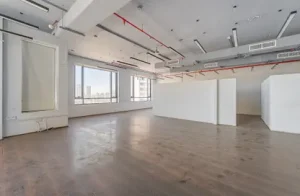
In March 2026, average rental rates across Dubai sat at roughly 137 AED per square foot for studios, 121 AED per square foot for one-bedroom apartments, and 125 AED per square foot for two-bedroom units, according to RestProperty. That means every extra 100 square feet in a one-bedroom lease costs somewhere around AED 12,000 a year, just to hold furniture and boxes that get touched twice a year.
Compare that to a long-term storage unit. A 50 to 100 square foot unit, enough to hold the full contents of a one-bedroom apartment’s overflow, typically runs a fraction of that annual figure. The gap isn’t marginal. It’s the difference between upgrading your apartment every time your belongings grow and simply storing what you don’t need daily while keeping the smaller, cheaper lease.
- Extra bedroom used mainly for storage: AED 12,000 to AED 24,000 a year in additional rent, depending on area
- Equivalent capacity in a storage unit: a small fraction of that, with no Ejari registration, no DEWA increase, and no chiller fee tied to it
- Flexibility: storage contracts run month to month in most Dubai facilities, while an apartment upgrade locks you into a full annual lease
For an expat who might relocate within the region, change jobs, or leave Dubai altogether within a few years, that flexibility matters as much as the raw savings.
The Rent Offset Model
Most expats think about storage reactively. Something doesn’t fit, so it goes into a unit. The Rent Offset Model flips that logic and treats storage as a deliberate substitute for square footage you’d otherwise be renting.
The idea is simple. Before renewing a lease or upgrading to a bigger apartment, calculate the annual cost per square foot of the extra space you’re considering, then compare it directly against the cost of a storage unit sized to hold the same overflow. In almost every case across Dubai’s rental market, the storage option costs less, sometimes dramatically less, and it comes with none of the long-term lock-in of a bigger lease.
This model works especially well for expats who know their time in Dubai has a horizon, even a loose one. Committing to a larger apartment is a bet that you’ll need that space for the full lease term. Committing to long-term storage instead keeps your housing cost proportional to what you actually live with day to day, while your seasonal items, spare furniture, and sentimental belongings sit safely elsewhere.
Where this decision plays out in practice

Expats across Dubai communities like JLT, Business Bay, and Al Barsha run into this exact choice at lease renewal time. A family in a two-bedroom apartment in Al Barsha, for instance, often has an entire second bedroom absorbed by items they touch once or twice a year. Moving that overflow into long-term storage rather than renewing at the two-bedroom rate can save tens of thousands of dirhams annually, while keeping everything accessible whenever it’s actually needed.
The same logic applies to expat-specific transitions. Many residents cycle through expat storage during relocations, contract renewals, or trips home, precisely because it lets them hold onto belongings without paying Dubai rent rates to house them in the meantime. And for anyone storing furniture specifically, rather than just boxes, furniture storage with climate control protects wood, leather, and upholstery from the heat and humidity that a standard storeroom or spare bedroom simply can’t manage as reliably.
What most people get wrong when they run this calculation
The mistake isn’t failing to consider storage. It’s comparing the wrong numbers. Expats often compare the sticker price of a storage unit against nothing, rather than against the actual rent they’re paying for the equivalent square footage. Once that comparison is made honestly, factoring in the real AED per square foot cost of a Dubai lease, the storage option almost always wins on pure economics.
The second mistake is treating this as a one-time decision. Rent in Dubai moves. Storage pricing moves too, though far more slowly and predictably. Revisiting the comparison at every lease renewal, rather than assuming the last decision still holds, keeps the maths accurate instead of stale.
A decision that compounds
Over three or four years, the gap between renting extra square footage and storing the overflow properly adds up to a meaningful sum, often enough to cover flights home, a car upgrade, or simply a lower monthly outgoing. It’s not a dramatic financial move. It’s a quiet one, made correctly once and then left to keep paying off.
If you’re weighing a lease renewal against the cost of holding onto everything you own, request a quote and we can help you work out what actually makes financial sense for your situation.