Your server room hit an ambient temperature warning last July, and by the time anyone checked, two units had already started throttling to protect themselves. Nobody had budgeted for it, nobody had a plan for it, and the fix cost more than a full year of proper climate-controlled storage would have.
This is the pattern that catches most Dubai SMEs off guard every summer. The heat isn’t a surprise. It arrives on schedule every year, usually from mid-May through late September, with daytime temperatures regularly passing 45 degrees. What catches businesses out isn’t the weather itself, it’s assuming that whatever protected their equipment through the cooler months will hold up once summer actually sets in.
What Dubai’s summer actually does to business assets
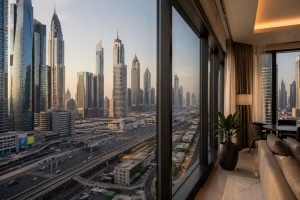
Extreme heat doesn’t just make offices uncomfortable. It accelerates wear on almost everything a small business owns. Gulf News reporting on summer heat damage notes that prolonged exposure to Dubai’s summer temperatures ages plastics, rubber, and electrical components well beyond what cooler months would produce, the same physical stress that shows up in server rooms, storage cupboards, and unventilated back offices across the city.
For an SME, this translates into a specific set of vulnerabilities most owners never audit until something fails:
- IT equipment and servers running in poorly ventilated storage rooms, where ambient heat pushes internal components past safe operating limits
- Paper documents and archived files sitting in humid storage, where moisture causes pages to stick together and mould to develop within weeks rather than months
- Office furniture, particularly wood and leather pieces, warping or cracking after a full summer in an uncooled storeroom
- Inventory and stock held in standard warehouse space, where heat cycles degrade packaging, adhesives, and anything temperature-sensitive
None of these failures happen overnight. They build across a full summer, which is exactly why most SMEs don’t connect the damage back to storage conditions until the replacement bill arrives.
The Summer Exposure Audit
Most business owners think about summer prep reactively, moving things around once the heat has already arrived. The Summer Exposure Audit flips that, treating every physical asset the business owns as something to be reviewed and relocated before the season starts, not during it.
The audit works through three questions for every category of asset a business holds. Does it contain electronics or components sensitive to heat cycling? Does it involve paper, wood, leather, or anything that absorbs moisture? Is it currently sitting somewhere that wasn’t specifically designed to manage Dubai’s summer conditions? Anything that answers yes to any of these gets flagged for climate-controlled storage before the temperature climbs, rather than after something has already gone wrong.
Running the checklist properly
- Move IT hardware, servers, and networking equipment out of standard storerooms and into climate-controlled storage before peak summer heat sets in, since internal components degrade faster with every uncontrolled heat cycle
- Audit paper archives and physical files for humidity exposure, moving anything business-critical into secure document storage rather than leaving it in a back office with no climate management
- Inspect office furniture for early signs of heat and humidity damage, since wood swelling and leather cracking are far cheaper to prevent than to repair
- Review inventory storage conditions for anything packaged, printed, or adhesive-based, since standard warehouse space in Dubai rarely holds a stable temperature through August
The businesses that get through summer with no damage are almost never the ones with the newest equipment. They’re the ones that moved everything sensitive before the heat arrived, rather than after.
Where this actually plays out for a small business
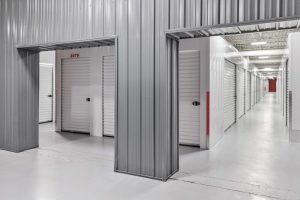
A marketing agency running out of a shared office in Business Bay, for example, might store a season’s worth of client archives, presentation equipment, and a couple of backup servers in a standard storage cupboard through winter with no issues at all. Once summer hits, that same cupboard, with no dedicated cooling, becomes the exact environment that shortens server lifespan and turns paper files brittle within a matter of weeks.
An IT consultancy running client hardware between contracts faces the same exposure at a larger scale. IT storage designed around Dubai’s climate keeps servers and networking equipment at a stable temperature regardless of what’s happening outside, which matters far more in August than it does in January.
The cost of skipping the audit
Most SMEs discover the cost of summer heat damage the same way, well after the fact, when a piece of equipment fails or a document archive turns out to be unreadable. That cost almost always exceeds what proper climate-controlled storage would have run for the same period, and it arrives with none of the warning that a scheduled summer audit would have provided.
Running through this checklist before the heat sets in costs an afternoon. Skipping it tends to cost considerably more once September arrives. Reach out to the team and we can help map out what your business actually needs moved before the next heatwave lands.