Moving into a smaller apartment does not have to mean living with less. In Dubai, where a one-bedroom unit typically runs between 600 and 1,200 square feet and studios start at around 300, the residents who feel most comfortable in compact spaces tend to share one habit: they are deliberate about what they keep on-site.
Rent pressure has pushed a significant portion of the city’s population into smaller units over the past few years. According to Khaleej Times citing Cushman and Wakefield Core, approximately 66 per cent of Dubai’s upcoming residential supply comprises studio and one-bedroom apartments, reflecting the scale of demand for smaller, more affordable units across the city. For residents making that shift, whether from a two-bedroom in Dubai Marina to a one-bedroom in JLT, or from a villa in Mirdif to an apartment in Al Barsha, the question is not how to fit everything in. It is what actually needs to be there.
The problem is not space. It is accumulated volume.
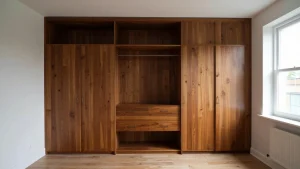
Most apartments feel smaller than they are because of what has built up over time. Furniture bought for a larger home that does not quite fit the new layout. Seasonal items occupying floor space year-round. A guest bed that comes out twice a year but dominates a room the other 363 days. Kitchen appliances that were used enthusiastically for three months and have not been touched since.
None of this is unusual. Dubai residents tend to accumulate steadily through household moves, lifestyle changes, deliveries during sale seasons, and the general inertia of keeping things that might be useful. The result is an apartment where every room carries extra load, and the sense of space that drew you to the property when you viewed it has quietly disappeared.
Personal storage solutions address this directly. Moving the things you do not need daily off-site costs a fraction of what upsizing to a larger unit would, and it returns the apartment to something closer to the version you signed up for.
What actually belongs in a smaller apartment
The residents who handle compact living most effectively tend to approach their home through a simple filter: what do I use at least once a month? What do I reach for seasonally? What is here because I have not decided what to do with it?
The first category belongs on-site. The second belongs in seasonal storage. The third is what fills most apartments to the point where they feel cramped, and it is the category worth addressing first.
In practical terms, this means:
- Winter bedding, heavy curtains, and extra duvets have no useful place in a Dubai apartment from April through October.
- Sports equipment used for one activity per season does not need floor space for eight months of the year.
- Furniture pieces that came from a previous larger home and have never found a proper place in the current layout are costing square footage every day.
- Sentimental items, documents, and keepsakes that residents want to keep but do not need to access regularly are better protected off-site than in a wardrobe.
Each of these categories is recoverable space. Taken together across a one-bedroom or studio apartment, the reclaimed area is significant.
The Space Return Framework
The most useful way to approach a smaller apartment in Dubai is not to think about storage as a workaround for not having enough room. It is a tool for returning the apartment to its actual dimensions.

The Space Return Framework works across three steps. The first is a category sweep, going room by room and identifying everything that has not been used in the past four to six weeks. This is not about decluttering or making permanent decisions. It is about identifying what is physically present but functionally absent.
The second step is a placement decision: does each identified item go off-site into storage, get donated, or return to active use somewhere in the apartment? For most residents, the majority of the items identified in step one belong off-site, at least initially. The storage period then functions as a trial absence if the item is not missed in two months, the decision about its future becomes easier.
The third step is a periodic review. Every three to four months, residents using storage revisit what is in the unit. Things that have been absent long enough to confirm they are not needed come out for donation or disposal. Seasonal items rotate as the calendar moves. The apartment stays calibrated.
Running this process once tends to produce a noticeable result within a single weekend. Running it periodically means the apartment does not drift back to its previous state.
Climate matters more than most residents account for
One consideration specific to Dubai that does not apply in the same way elsewhere: summer storage conditions matter. An apartment that is air-conditioned year-round is not always keeping items at stable conditions, particularly in rooms that are closed off, near exterior walls, or in buildings with inconsistent cooling. Humidity builds in sealed spaces during the summer months.
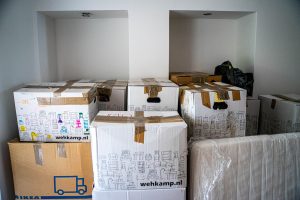
Anything with genuine value artwork, leather furniture, electronics, photographic equipment, or high-quality textiles is better off in a climate-controlled unit during the months between June and September than stacked in a storeroom or tucked into a built-in wardrobe with limited airflow.
Residents heading away for summer and leaving an apartment unoccupied face this more acutely. A closed, sealed apartment in Dubai’s summer is not a neutral storage environment.
Small adjustments that make a larger difference
For residents currently managing a compact apartment in communities like JVC, Barsha Heights, or Downtown Dubai, a few practical steps tend to make the biggest difference:
- Rotate seasonal items every six months. What comes out for winter goes into storage when summer starts, and vice versa.
- Identify one category of items per room that is not in active use and move it off-site. One category per room, done once, recovers meaningful space.
- Avoid using the apartment as a decision-deferral zone. When something arrives and there is no clear place for it, that is the moment to decide, not six months later when it has become part of the furniture.
- For residents in short-term or transitional accommodation, short-term storage provides a holding space for items that belong in the next home, not the current one.
A smaller apartment, used well, is enough
The residents in Dubai who live most comfortably in compact spaces are not necessarily the ones with the least. They are the ones who have matched their on-site inventory to their actual life rather than their aspirational one. Everything they need is accessible. Everything else is nearby when they need it, and absent when they do not.
That balance is achievable in most apartments, regardless of size, with one clear-out session and a storage plan that actually fits how the space gets used. If you want to talk through what makes sense for your situation, get in touch with the team and we can help you work out a practical approach.