Something has shifted in how a growing number of Dubai residents think about their homes. The assumption that bigger is always better, that the goal is always to upgrade to a larger apartment, is quietly giving way to a different kind of logic. One that prioritises location over size, quality of daily life over square footage, and intentional living over the accumulation of space that mostly gets filled rather than used.
It is not a fringe movement. It is a practical response to the realities of Dubai’s rental market, and it is reshaping how residents think about the relationship between where they live and what they own.
The Financial Logic Is Hard to Argue With
Dubai’s rental market has a well-documented characteristic. The premium for location is steep, and the jump in cost between a well-located smaller apartment and a larger one in a less convenient area is substantial.
A one-bedroom apartment in JLT, Business Bay, or Downtown Dubai puts a resident within walking distance of their workplace, close to dining and leisure, and connected to public transport in a way that reduces the daily friction of city life significantly. The same budget applied to a larger apartment in a more peripheral location trades square footage for commute time, transport costs, and the general inconvenience of being further from everything.
When residents do that calculation honestly, many find that the smaller, better-located apartment wins on almost every measure of daily quality of life. The only category where it loses is storage space. And that, increasingly, is a problem with a solution that does not require moving to a bigger apartment.
The monthly cost of a personal storage unit is a fraction of the difference in rent between a compact well-located apartment and a larger peripheral one. Residents who make this comparison often find they are saving money overall while living in a more convenient location with a less cluttered, more functional home.
What Smaller Living Actually Looks Like in Dubai

The shift toward smaller, more intentional apartments is particularly visible in Dubai’s high-density residential communities. In JLT, Business Bay, Dubai Marina, and Downtown, studio and one-bedroom apartments are consistently among the most in-demand rental properties according to Bayut’s annual market reports. Residents in these communities have made an active choice about where they want to be, and they are adapting their lifestyles to make compact living work.
What that adaptation looks like in practice varies by household. But certain patterns emerge consistently.
Residents in smaller apartments tend to be more deliberate about what they own and where things live. They are more likely to question whether an item genuinely earns its place in the home on a daily basis. And they are increasingly using offsite storage not as an overflow solution for things they cannot decide about, but as a deliberate extension of their living setup, a second layer of space that holds the things they own but do not need to access every day.
This is a meaningfully different relationship with storage than the traditional model. It is proactive and intentional rather than reactive and apologetic.
The Items That Work Best Offsite
Not everything benefits from being offsite. The residents who make this model work well have a clear sense of which items belong in the home and which belong in storage, and they organise accordingly.
Items that work well in offsite storage for compact apartment living include:
- Seasonal clothing and accessories not needed for the current three to four months
- Sports and fitness equipment used periodically but not daily
- Suitcases, travel bags, and luggage used a few times a year
- Hobby and creative materials that come out for specific projects
- Sentimental items and keepsakes that are important but not decorative
- Occasional-use kitchenware, serving items, and entertaining equipment
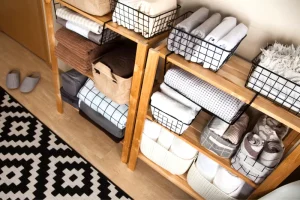
- Off-season bedding, towels, and home textiles
- Items in transition, things owned but not yet decided about
The home, once these categories are offsite, holds only what is genuinely in active use. The result is an apartment that feels significantly larger than its square footage because every item in it has a clear purpose and a proper place.
Personal storage solutions designed for this kind of lifestyle setup offer the flexibility and accessibility that makes the model practical rather than theoretical.
The Intentional Living Dimension
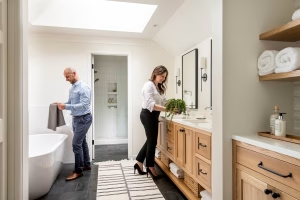
There is a dimension to this shift that goes beyond financial logic and practical organisation. Many Dubai residents who have moved toward smaller, better-configured living spaces report a quality of life improvement that they did not fully anticipate.
A home that contains only what is actively used and genuinely valued is easier to maintain, faster to clean, calmer to spend time in, and more restorative after a long day than one that carries the visual and physical weight of everything accumulated over years of living.
Dubai is a high-intensity city. The pace is fast, the stimulation is constant, and the demands on residents’ time and attention are significant. Coming home to a space that is calm, uncluttered, and organised is not a minor benefit. For many people, it is one of the more meaningful improvements to daily life that a relatively small change in approach can produce.
Offsite storage is the practical tool that makes this possible without requiring residents to make permanent decisions about every item they own. Things can be stored rather than discarded. Decisions can be deferred without the items in question cluttering the living space in the meantime.
Short-term storage is particularly well suited to residents in transition, those who are trying a new living configuration and want the flexibility to adjust as their needs become clearer.
Setting Up the System: How It Works in Practice
The residents who make compact living with offsite storage work well tend to approach it as a system rather than a one-off clear-out. The setup is straightforward once the principle is clear.
The first element is a clear home inventory. Every item in the apartment is either in active daily use, in active weekly or monthly use, or in occasional use. The third category is the primary candidate for offsite storage. Items used a few times a year do not need to live in the home full time.
The second element is a retrieval mindset rather than a scarcity mindset. The most common objection to moving items offsite is the concern that they will not be accessible when needed. In practice, with a well-located storage facility and 24/7 access, retrieval is a minor inconvenience at most. The items are not gone. They are simply not in the way.
The third element is a regular review cycle. Twice a year, typically aligned with Dubai’s seasonal transitions, residents who use this model do a quick audit of what is in storage and what is in the home. Items that have been in storage for a year without being retrieved often reveal themselves as candidates for donation or sale. Items that have been retrieved frequently suggest they belong in the home after all.
This cycle keeps the system honest and prevents storage from becoming a passive accumulation of items that have simply moved from one location to another without being genuinely assessed.
The Seasonal Dimension
Dubai’s climate creates a natural rhythm that makes seasonal rotation a practical and logical part of compact living. The items that serve a resident well through the October to April season are often entirely different from those needed through the summer months.
Winter clothing, heavier bedding, outdoor entertaining equipment, and sporting gear used in cooler weather all become redundant in summer. Summer clothing, travel accessories, and lighter home textiles take their place.
For residents in compact apartments, rotating these seasonal categories in and out of seasonal storage means the home always holds the right things for the current season rather than carrying the full year-round wardrobe and equipment load simultaneously.
This seasonal rotation is one of the most effective and underused tools in compact living. It effectively doubles the functional wardrobe and equipment space available to a resident without adding a single square foot to the apartment.
Quick Wins for Residents Considering This Approach
If the logic here resonates but the starting point feels unclear, these are the most effective immediate steps:
- Walk through the apartment and identify every item not used in the past 30 days. That list is your first offsite storage candidate pool.
- Start with one category rather than everything at once. Seasonal clothing is usually the easiest and most immediately impactful.
- Choose a storage facility with genuine 24/7 access. The retrieval concern disappears when access is genuinely convenient.
- Create a simple digital inventory of what goes into storage. A photograph of each box or item takes seconds and makes retrieval effortless.
- Review the storage unit every six months and make active decisions about what comes back and what moves on.
A Different Way to Think About Home
The residents making this model work in Dubai have arrived at a perspective that is worth articulating clearly. The home is not a container for everything you own. It is an environment for the life you are actively living.
What serves that life changes over time, over seasons, and over life stages. Offsite storage is the practical infrastructure that allows the home to reflect the current chapter rather than carrying the accumulated weight of every previous one.
For residents in the Greens, the Views, and similar well-established residential communities, self-storage nearby offers the accessible, secure setup that makes this approach genuinely easy to maintain rather than effortful to sustain.
If you want to talk through how to configure a storage setup that works with your apartment and your lifestyle, get in touch and the team will help you find the right fit.
The apartment does not need to be bigger. It just needs to hold the right things.