Wholesale in Dubai does not run on a neat, predictable rhythm. Shipments arrive in bulk, often from multiple origins with overlapping delivery windows. Stock moves fast when demand is there and sits completely still when it is not. And the physical space most traders are working with, whether a single warehouse bay in Al Quoz or a shared facility near Jebel Ali, almost never matches the actual volume pattern of the business.
The gap between what arrives and what ships out is where most of the operational friction lives. Managing that gap well is what separates traders who scale from those who spend half their time firefighting.
Dubai’s position as a regional re-export hub adds a layer of complexity that traders elsewhere do not face. Goods coming in from Asia often sit while customs documentation is processed, redistributed to smaller buyers, or re-palletized for onward movement to Saudi Arabia, Egypt, or East Africa. That holding period is not wasted time, but it does need space, and that space has a cost whether or not it is managed deliberately.
Why Primary Warehouse Space Is the Wrong Container for Overflow Stock
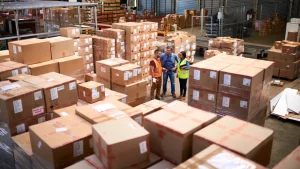
Most wholesale operators make the same early mistake. They treat their main warehouse as the default holding location for everything, including stock that will not move for four to six weeks. The result is a workspace that is permanently congested, where staff spend time working around pallets rather than through them.
Primary warehouse space is expensive. In Al Quoz and the surrounding industrial corridors, rates have climbed steadily over the past two years, with Bayut commercial listings showing consistent upward pressure on warehouse leasing costs. Tying that space to slow-moving buffer stock is one of the more common ways wholesale businesses quietly erode their own margins.
The more efficient model separates holding stock from operational stock. What needs to be picked, packed, or moved in the next five days stays in the primary facility. What arrived early, awaits redistribution, or is held for a specific customer release date moves to wholesale storage off the main floor.
The Shipment Gap Model
The framework that makes this work consistently is treating each incoming shipment as having two distinct phases: the active phase and the holding phase.
The active phase begins when goods are cleared and ready to move. Orders are being fulfilled, redistribution is happening, buyers are collecting. The stock is working.
The holding phase is everything before that point and everything that sits once initial demand has been met. Stock waiting on customs clearance. Overstock from a consignment that came in heavy. Goods earmarked for a buyer who is not ready to receive yet. Pre-positioned inventory for a seasonal push that is four weeks out.
Treating these two phases as requiring the same space is where most traders lose efficiency. When the holding phase is moved to a separate, lower-cost storage facility, the primary warehouse runs leaner, the team works faster, and the actual cost per square meter drops across the board.
This is the Shipment Gap Model: size your operational space for your active phase, and plan external storage for your holding phase. The ratio shifts with every business, but the principle holds regardless of category.
What Dubai’s Seasonal Trading Cycles Demand

The wholesale market in Dubai does not run flat across the calendar year. There are distinct surges: the pre-Ramadan stock push, the post-summer re-entry in September and October, and the Q4 consumer goods wave ahead of year-end retail peaks.
Each of these cycles creates a predictable pattern where incoming volume spikes before outgoing volume responds. Traders who have not planned for the gap between those two curves end up scrambling for temporary space at exactly the moment when temporary space is hardest to find and most expensive to arrange.
Booking short-term business storage in advance of a known shipment surge costs a fraction of what emergency overflow costs in the moment. Most traders who have been through one difficult seasonal crunch plan differently the next time.
Stock That Needs More Than Just Space
Not all wholesale inventory is the same to store. Electronics, personal care products, food-adjacent goods, and certain textiles all have sensitivity requirements that a standard warehouse bay does not address.
Dubai’s summer months create a specific risk window. Ambient temperatures in non-climate-controlled storage facilities can cause significant degradation to certain product categories, affecting shelf life, packaging integrity, and resale value. This is not a minor concern for traders working with goods that will be inspected on arrival by buyers in other markets.
Climate-controlled storage for temperature-sensitive wholesale inventory is not a premium add-on. For specific categories, it is a basic requirement. Goods that arrive in good condition and leave in degraded condition because of poor interim storage represent a direct and avoidable financial loss.
Practical Decisions That Make a Difference
Wholesale traders who manage stock-between-shipments well tend to share a few consistent habits:
- They audit incoming shipments by expected dwell time at the point of receiving, not after the warehouse has filled
- They separate goods that are customer-allocated from goods that are open inventory, and store them accordingly
- They treat external storage as a planned cost, not a reaction to a problem
- They review their holding-versus-active ratio at least once per quarter
- They factor storage into landed cost calculations when pricing for re-export
None of these are complicated. But all of them require making the decision before the shipment arrives, not after.
Location as a Practical Variable
For traders operating in or near Al Quoz, the logistics of external storage are relatively straightforward. The industrial area runs along a corridor that connects easily to Sheikh Zayed Road, Jebel Ali, and the main arterial routes used for distribution. Business storage in Al Quoz is well-positioned for exactly this use case, with access that supports regular movement without adding significant transport time or cost to the operation.
Proximity matters more than most traders account for when choosing a storage facility. A unit that is cheap but poorly located adds handling time on every single collection. Over a trading year, that adds up.
What Good Interim Storage Actually Protects
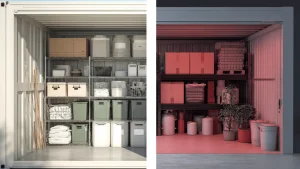
Beyond the obvious space management argument, there is a less-discussed benefit to structured interim storage: it protects the condition and integrity of the goods themselves.
Wholesale stock that sits in a congested primary warehouse is at higher risk of damage, misplacement, and picking errors. When everything is in one place and the space is under constant pressure, goods get moved around, stacked incorrectly, or buried under subsequent arrivals. Separating holding stock into a dedicated corporate asset storage facility means it sits undisturbed until it is needed, in the condition it arrived.
That matters for traders dealing with buyers who inspect on delivery. A damaged pallet, a short shipment caused by a picking error, or goods that have been opened and resealed all create problems that are disproportionate to their cause.
The gap between shipments is a cost center or a profit lever, depending on how it is managed. Traders who treat it as a planning problem, rather than a space problem, tend to come out ahead. If you are looking at your current storage setup and recognizing the pattern, reach out to the Storage Space team via the contact page to talk through what interim storage could look like for your operation.