You’ve got a stockroom in Mall of the Emirates overflowing with winter stock nobody can sell in July, while your Mirdif branch is turning away customers because the same product ran out three weeks ago and nobody knew until the shelf was already empty. Same chain, same inventory, completely different problems, and no system connecting the two.
This is what happens when retail expansion outpaces retail logistics. Dubai’s retail sector keeps adding branches faster than most chains can build the backend to support them, and the result is a familiar mess: seasonal stock stuck at one location, fast-moving product stranded at another, and a stockroom-by-stockroom approach that treats each branch like its own isolated business rather than part of a chain.
Why multi-branch retail in Dubai runs into this so often
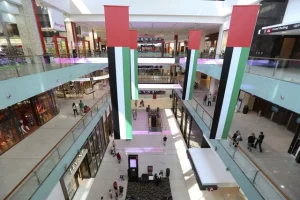
Dubai’s retail footprint has grown fast enough that most chains are managing more locations than their original operations were ever built for. Neighbourhood retail centres in areas like Al Barsha and Motor City are reaching near-full occupancy within a year of opening, according to Cushman & Wakefield Core, which means chains keep adding branches into new communities faster than their supply chains can adjust.
Primark’s own Dubai rollout is a useful example of the pace involved. The brand opened three stores across the city within a matter of months in 2026, at Dubai Mall, City Centre Mirdif, and Mall of the Emirates. Each of those stores needs its own rhythm of stock delivery, seasonal changeover, and overflow handling, and doing that well across three locations at once is a fundamentally different challenge than running one flagship store.
The problems that show up are consistent across chains of every size:
- Seasonal stock sits in one branch’s backroom long after the season ends, because there’s no shared space to consolidate it
- Fast-moving branches run out of stock while slower branches sit on excess of the same product
- Promotional and display material gets duplicated at every branch instead of shared from a central point
- Each store manager solves storage problems independently, with no visibility into what other branches are holding
None of this is a staffing problem. It’s a structural one, and it gets worse with every new branch a chain opens.
The Hub and Spoke Inventory Model
Most retail chains store stock the way they staff stores: independently, branch by branch, with each location responsible for its own overflow. The Hub and Spoke Inventory Model replaces that with a single central storage point that every branch draws from and returns to.
Under this structure, a chain’s Dubai branches, whether in Al Barsha, Mirdif, or Business Bay, stop treating their backroom as the only place stock can exist. Instead, a central facility holds the buffer: seasonal inventory waiting to rotate in, slow-moving stock waiting to redistribute to a branch where it sells better, and promotional material shared across every location rather than duplicated at each one.
The advantage isn’t just space. It’s visibility, since a chain that knows exactly what’s sitting in central storage can move stock to wherever demand actually is, instead of guessing branch by branch. A retailer with excess inventory at a slower Al Barsha location and a stockout at a faster-moving Mirdif branch can solve both problems from the same pool, rather than treating them as two unrelated issues.
What this looks like for a chain actually running it
A homeware retailer with branches across Dubai’s community malls, the kind reaching full occupancy fast in areas like Al Barsha and Nad Al Sheba, typically hits this problem within its first two or three branch openings. Seasonal ranges, display fixtures, and overstock start accumulating faster than any single backroom can absorb.
Moving that overflow into retail inventory storage designed for exactly this purpose solves the immediate space problem, but the bigger win is centralising it. Instead of six branches each holding their own version of last season’s stock, one facility holds all of it, sorted and ready to redistribute wherever it’s needed next.
For chains with a branch in the Mall of the Emirates area specifically, where footfall and stock turnover run especially fast, having storage support near Mall of the Emirates means overflow can move in and out within the same day, matching how quickly that particular location actually sells through inventory.
Getting the structure right before it becomes a real problem
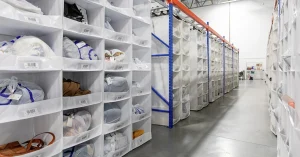
- Consolidate seasonal and promotional stock into one facility, rather than letting each branch hold its own overflow
- Track what’s sitting centrally so stock can move to whichever branch has demand, not just wherever it was originally shipped
- Separate fast-moving product from slow-moving product in storage, so redistribution decisions are based on real sell-through, not guesswork
- Review the central inventory monthly, since a hub that isn’t actively managed just becomes a bigger version of the same clutter problem
Dubai’s retail sector contributes over a quarter of the city’s GDP, and that scale comes with genuine complexity for any chain trying to run more than a handful of branches well. A single, well-managed storage hub tends to be the difference between a chain that scales cleanly and one that just adds branches without ever fixing the underlying logistics.
Where the whole approach breaks down without it
Chains that skip this step usually don’t notice the cost directly. It shows up as markdown stock nobody moved in time, duplicate fixtures bought because nobody knew what was already sitting somewhere else, and stockouts at busy branches while the same product sits unsold three exits down the highway. None of that gets traced back to storage. It just gets written off as normal retail waste.
It doesn’t have to be. Get in touch with the team and we’ll help you map out a central storage setup that actually matches how your branches sell.