Dubai’s fashion retail market operates at a scale that commands global attention. According to Cushman & Wakefield Core, Fashion Avenue in Dubai Mall now ranks as the 11th most expensive retail location globally, with prime retail rents up 9% year-on-year and super-regional malls running at near-full occupancy. That context matters when thinking about what summer means for fashion retailers operating in this market.
The summer slowdown is not simply a dip in footfall. It is a structural shift. Expatriates make up over 92% of Dubai’s population, and a significant proportion leaves between June and September. The residents who remain shop differently, spending time in climate-controlled malls but with considerably less appetite for full-price fashion purchases. Retailers who built their inventory around the October-to-April peak season are left holding significant stock in a market where the audience for it is at its annual low.
How that inventory is managed between June and September has a direct bearing on margin, stock condition, and how cleanly the retailer re-enters the market in autumn.
The cost of carrying dead stock on an expensive floor
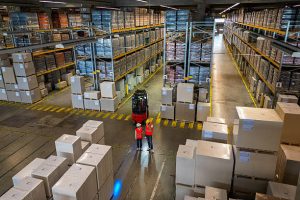
At AED 400 to AED 2,000 per square foot in super-regional malls, every metre of floor space has a precise daily cost. Stock that is not turning in June, July, and August is not simply idle. It is occupying space being paid for at rates among the highest in the world.
The commercial reflex is to discount aggressively and clear the floor. That has its own cost, both in margin and in brand positioning, particularly for retailers whose identity depends on price integrity. The more considered approach is to separate what genuinely needs to be on the floor from what is better managed off-site, and to move surplus inventory into structured storage until the market returns in September.
What makes this specific to Dubai is the combination of pressures arriving simultaneously in June: peak heat, peak resident departures, and peak rental costs, all in the same window.
What happens to fashion inventory left in retail environments over summer
Fashion stock is more environmentally sensitive than most retailers account for in their storage planning. The combination of heat, humidity fluctuation, and reduced air conditioning in partially powered-down retail environments creates conditions that degrade stock in ways that are not always immediately visible.
Delicate fabrics, silks, linens, and fine knits, can develop subtle discolouration or texture changes from prolonged exposure to fluctuating humidity. Leather goods and accessories dry and develop surface cracking when climate management is reduced or run intermittently. Garments stored in dense, compressed rails for months develop set creases that require steaming before they can return to sale.
Packaging degrades too. Shoeboxes soften. Tissue paper yellows. Gift packaging that was pristine in April can look noticeably tired by September, which affects both full-price presentation and the customer’s perception of value. Cumulatively, across a season’s worth of stock, this represents a measurable reduction in the value of inventory the retailer was already planning to carry forward.
The Stock Rotation Model
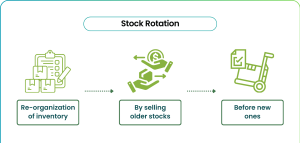
The most effective approach Dubai fashion retailers use to manage summer inventory is a structured rotation rather than a binary choice between keeping everything on-site or moving it wholesale.
The model works in three layers:
- Active floor stock: The curated selection that stays on the shop floor through summer. Lighter fabrics, resort wear, and any new-season arrivals timed for a late-summer introduction. This is the inventory earning its floor space.
- Held off-site, first rotation: End-of-season pieces that did not clear in the spring sale, transitional stock, and anything too heavy or warm for summer display. These go into retail inventory storage and return in September as part of the autumn relaunch.
- Held off-site, second rotation: Slow-moving stock, overstock from the peak season, and pieces being considered for the next sale cycle or outlet. These need proper storage conditions but are not earmarked for immediate return.
Running stock through this model before summer begins gives the retailer a clean floor, a manageable active inventory, and a structured plan for what returns when. It also makes the September relaunch feel deliberate rather than reactive.
Climate control as a stock protection decision
For fashion retailers holding significant inventory value off-site, the difference between standard storage and climate-controlled storage is a straightforward cost-benefit calculation, not a luxury consideration.
Replacing a damaged leather bag or a discoloured silk blouse costs more than the marginal difference in storage fees for three months. Returning autumn stock to the floor in pristine condition, without the steaming, re-ticketing, and repackaging that poorly stored inventory requires, saves time that has a real operational cost. Retailers managing higher-value inventory, designer accessories, premium knitwear, or branded footwear, should treat climate-controlled conditions as a baseline requirement.
What the September relaunch actually requires
Fashion retail in Dubai treats September as its real new year. Residents return, the tourist mix shifts back toward higher-spending demographics, and malls launch their autumn campaign cycle. For retailers, the ability to re-enter this window at full strength is a significant commercial moment, and one that fills fast.
Retailers who managed their summer inventory well arrive in September with stock in sellable condition, a clear picture of what they have, and the operational bandwidth to execute a proper relaunch. Retailers who did not tend to spend the first two to three weeks of September sorting through stock, dealing with condition issues, and rebuilding a floor presentation that should have been ready before the month began.
The relaunch is not just about what is on the floor. It is about how confidently it is priced, how it is presented, and how quickly the team can move through it. All of that is easier when inventory arriving back from storage is organised, labelled, and in the same condition it left in.
For retailers operating in the Mall of the Emirates corridor or along Sheikh Zayed Road, storage for retailers nearby provides an accessible, commercially oriented option built for exactly this kind of seasonal workflow.
Practical steps for a structured summer handover

The transition from peak season to off-season storage works best when it is treated as a formal process with clear stages rather than a rushed clear-out.
- Complete a full stock count before anything moves off-site, so quantities and conditions are documented
- Separate active summer floor stock from off-site stock before packing begins
- Pack garments on hangers where possible rather than folding, to preserve presentation
- Box accessories and footwear by category and label clearly for easy retrieval
- Photograph high-value pieces before storage for insurance and condition reference
- Book storage capacity before mid-June, when demand from multiple retail sectors tightens simultaneously
Retailers that run this process consistently find that summer, despite being a low-revenue period, becomes one of the most operationally productive quarters of the year. Stock is audited, organised, and properly managed in a way that the pace of the peak season rarely allows.
Storage as part of the retail operating model
The retailers in Dubai who use off-site storage most effectively have stopped treating it as a seasonal emergency measure and started treating it as a permanent part of how they operate. Storage is not where stock goes when there is nowhere else to put it. It is where specific categories of inventory live between their commercial moments.
That shift in thinking, from overflow solution to structured asset management, is what separates retailers who arrive at each season ready from those who spend the first weeks catching up.
For fashion retailers planning their summer inventory transition, the team at Storage Space can advise on unit sizing, climate options, and access arrangements that suit a retail workflow. Request a quote to get a storage plan in place before the season closes.