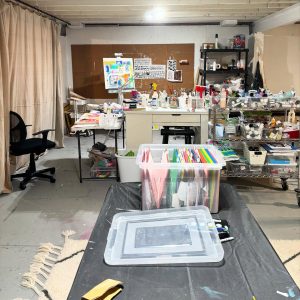
There is a particular kind of organized chaos that anyone who has worked inside an architecture or interior design studio in Dubai will recognize immediately. One corner holds material samples from a project that completed three months ago. A rolled set of drawings leans against the wall because there is nowhere obvious to put it. A crate of custom tiles arrived for a client who then changed direction, and now it sits between the printer and the emergency exit. The studio is busy, productive, and genuinely good at what it does. It is also quietly running out of space.
This is project overflow. And for design firms in Dubai, it is not a sign of poor management. It is a structural feature of how the industry works.
Why Design Firms Accumulate More Than Most

Architecture and interior design projects generate physical material at every stage. This is not like a consulting firm where the work lives entirely on a server. Design work produces things you can hold, stack, roll, box, and trip over.
A single active project might involve material sample boards, finish libraries, fabric swatches, paint reference collections, scaled models, printed presentation boards, large-format drawings, and specification binders. Multiply that across four or five concurrent projects, add the material from projects recently completed but not yet fully closed out, and the volume becomes significant very quickly.
Dubai’s design sector adds further complexity. The city’s construction and fit out pipeline is substantial. Projects run long, sometimes spanning two or three years from concept to handover. Clients change their minds. Specifications get revised. Materials ordered for one scheme get held back when a project pauses, then need to be stored somewhere sensible while decisions are made.
The result is that most design studios carry a persistent physical backlog that their studio space was never really designed to accommodate.
The Cost of Storing Everything On-Site
The instinct is to keep everything in the studio, because proximity feels like control. If the samples are here, the thinking goes, they are accessible. If the drawings are on the shelf, they are findable.
The reality is usually different. When a studio accumulates more material than its space was designed for, the organization breaks down. Things get stacked on top of other things. Samples from different projects get mixed. Finding a specific material for a client meeting becomes a fifteen-minute search rather than a thirty-second retrieval.
There is also a straightforward cost argument. Studio space in Dubai, particularly in the creative and commercial districts where many design firms are based, is not cheap. Using a significant portion of that space to store project materials, sample libraries, rolled drawings, and crated finishes means paying premium rent for what is essentially a warehouse function.
Moving project overflow to commercial storage allows the studio to use its space for the work it was actually built to support: design, collaboration, client presentations, and creative thinking.
What Design Firms Typically Need to Store
The categories of overflow vary between firms, but certain types of material come up consistently across the industry.
Material and finish samples are perhaps the most common challenge. A well-established interior design practice builds up a substantial sample library over time. Stone samples, tile references, fabric swatches, wallcovering books, hardware finishes, and paint references all accumulate. Not all of them are relevant to current projects, but discarding them entirely feels wasteful when they may be exactly what a future project requires.
Rolled and flat drawings represent another significant volume. Large-format drawings for completed projects need to be retained, often for several years, for contractual and liability reasons. They are not accessed regularly, but they cannot simply be discarded.
Custom and excess materials are a particular feature of Dubai’s design market. Bespoke tiles, custom-cut stone, specialty fabrics, and other project-specific materials often arrive in quantities slightly larger than required. These remnants have real value, both financially and practically, but they need a proper home that is not the corner of a working studio.
Presentation and model assets, including physical scale models, presentation boards, and mounted visualizations, are often retained after project completion for portfolio purposes or award submissions. They are bulky, fragile, and need careful storage conditions.
For all of these, corporate asset storage provides a secure, organized environment that keeps materials accessible without allowing them to dominate the working studio.
The Project Lifecycle Storage Model
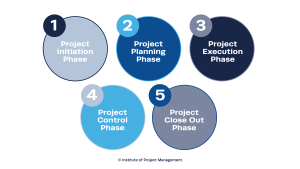
One of the most useful frameworks for design firms thinking about this systematically is to map storage needs to the lifecycle of a project rather than treating overflow as a single undifferentiated problem.
During the active phase of a project, materials need to be accessible and close at hand. The studio is the right place for current sample boards, live drawing sets, and active specification documents.
As a project moves into the delivery and handover phase, the volume of material associated with it starts to reduce but does not disappear entirely. Retained drawings, close-out documentation, and any remaining materials shift from being active working tools to being reference and archive material. This is the moment to move them into structured offsite storage rather than letting them accumulate in the studio.
After project completion, the archive function takes over entirely. Drawings need to be retained, records need to be maintained, and any residual materials need a proper home. Secure document storage handles the paperwork and specification records, while physical materials go into commercial units organized by project.
This phased approach means the studio is always carrying only the material genuinely relevant to current and near-term work. The backlog stops building.
Climate Considerations for Design Materials
This is a point that design professionals in Dubai understand better than most, but it is worth making explicit. Many of the materials that flow through an architecture or interior design practice are genuinely climate-sensitive.
Natural stone samples can absorb moisture and develop surface staining if stored in humid conditions. Timber samples and wooden models warp and crack in fluctuating temperatures. Fabric swatches and wallcovering references fade, degrade, or develop mildew if exposed to heat and humidity over extended periods. Printed presentation materials and mounted boards curl and separate in unstable environments.
Dubai’s summer conditions, even inside a building that is broadly air-conditioned, can be unforgiving for stored materials. Climate-controlled storage maintains the stable temperature and humidity levels that protect these materials properly, ensuring that a sample library or drawing archive retained over summer comes back in the same condition it left.
For firms that invest significantly in building quality material libraries, this protection is not a luxury. It is a basic condition of maintaining the value of what they have built up.
The Al Quoz Advantage for Design Firms
There is a practical geographic dimension worth noting. Al Quoz has become one of Dubai’s most significant creative and design districts. Architecture studios, interior design firms, galleries, fabricators, and material suppliers are clustered in the area in a way that makes logistics genuinely convenient.
Storage Space is located in Al Quoz Industrial Area 4, which means design firms based in or operating through the district can access stored materials quickly and practically. A project manager retrieving a sample for a client presentation, or a team collecting rolled drawings for a site visit, is not making a long journey. The storage facility functions as a nearby extension of the studio rather than a distant depot.
For firms managing interior design storage in Al Quoz, this proximity makes the difference between a storage arrangement that gets used properly and one that gets ignored because access feels inconvenient.
Quick Wins for an Overloaded Design Studio
If your studio is feeling the pressure of accumulated project material, these are the most practical immediate steps:
- Identify all material associated with projects that completed more than six months ago and move it into a designated archive category.
- Create a simple rule: anything not referenced in the last 90 days moves offsite.
- Audit the rolled drawing storage. Most firms find they are retaining far more hard copies than necessary given the digital files available.
- Designate one offsite unit as the sample library archive, separate from active project material.
- Before the next major project kicks off, clear the studio of the previous project’s material entirely rather than letting the layers accumulate.
Giving the Studio Back to the Work
A design studio should feel like a place where creative thinking happens. It should be inspiring, clear-headed, and organized in a way that supports the quality of the work. When project overflow starts to dominate the physical environment, that quality suffers in ways that are hard to quantify but easy to feel.
The solution is not a bigger studio. It is a smarter approach to what lives in the studio and what lives somewhere else.
If your firm is dealing with accumulated project overflow and wants a practical conversation about the right storage configuration, request a quote and the team will help you work out exactly what you need.
Good design deserves a good environment to happen in. That starts with giving the studio space to breathe.