The honest answer is: not everything.
Climate-controlled storage is worth paying for. In Dubai, it is often the difference between retrieving something intact and retrieving something that needs to be replaced. But the question most residents never stop to ask is which of their items actually require it, and which ones would be perfectly fine in a standard unit.
Getting that distinction right matters, both for your belongings and your budget.
What climate control actually does
A climate-controlled storage unit maintains a consistent temperature and humidity level, regardless of what is happening outside. In Dubai, the recommended band for mixed household goods sits around 21°C and 50% relative humidity conditions that protect most item categories from heat damage, mold, and material degradation.
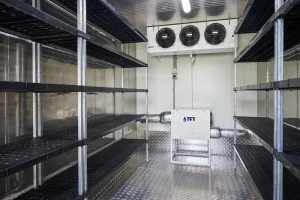
The reason this matters so much locally is the gap between indoor and outdoor conditions. A non-climate-controlled storage unit in Dubai can reach internal temperatures of 50 to 55°C in summer. That is not a theoretical risk. At those temperatures, adhesives soften, wood expands and cracks, and organic materials begin breaking down. The damage is often irreversible by the time it is discovered.
Households using standard storage through a Dubai summer commonly report avoidable losses of AED 1,500 to 2,000 per year from heat and humidity-related damage alone. For most people, that figure exceeds what the climate premium costs over the same period.
The Material Sensitivity Index
Rather than guessing item by item, it helps to think in terms of materials. The Material Sensitivity Index is a way to categorise what you own by how each material responds to heat, humidity, and temperature fluctuation. Three categories cover most household items.
High sensitivity — climate control required
These are materials that deteriorate quickly and often permanently when exposed to sustained heat or moisture:
- Electronics — laptops, cameras, audio equipment, and anything with circuit boards or battery components. Internal components degrade under sustained heat, and moisture causes corrosion that is not visible until the item fails.
- Leather goods — sofas, bags, shoes, and jackets. Leather dries and cracks in heat, and develops surface mould at high humidity.
- Solid wood furniture — tables, cabinets, bed frames, and bookshelves. Wood expands and contracts with temperature and moisture shifts. Veneers peel, joints loosen, and surface finishes crack.
- Artwork, prints, and photographs — paper and canvas are highly moisture-sensitive. Photographs can stick together permanently, prints can yellow or warp, and oil paintings can crack.
- Musical instruments — guitars, violins, and wind instruments are built to tight tolerances. Sustained heat and humidity changes put them permanently out of shape.
- Wine, spirits, and temperature-sensitive consumables — quality bottles stored in heat are damaged regardless of seal integrity.
For any of these, climate-controlled storage is not a premium option. It is the minimum standard required to keep the item intact.
Medium sensitivity — climate control recommended
These materials are more resilient, but prolonged exposure in a Dubai summer can still cause problems:
- Upholstered furniture — fabric sofas, armchairs, and headboards. Fabric handles heat reasonably well but can develop odour or mould if any residual moisture was present when stored.
- Books and documents — paper yellows and becomes brittle above certain humidity levels. Hardcovers with glued spines are more vulnerable than paperbacks and can separate entirely.
- Clothing and textiles — natural fibres like wool, silk, and cotton are more susceptible than synthetics. High humidity over several months creates real risk even for items packed in sealed bags.
- Collectibles and antiques — the sensitivity depends on material, but most antique items benefit significantly from stable conditions.
If these items are being stored for more than two or three months through the summer, climate control is worth the additional cost.
Lower sensitivity — standard storage is usually fine
Some items handle heat and humidity well and do not require climate-controlled conditions:
- Metal garden furniture and outdoor equipment, designed for exposure
- Plastic storage containers and garden tools
- Gym weights, resistance equipment, and rubber-based gear
- Kitchenware, including pots, pans, and ceramic items, which are not materially affected by heat
- Bicycles, where frames and components are generally heat-tolerant, though rubber seals can degrade over a very long period
For these, a clean, secure standard unit is sufficient. Paying for climate control on items that do not need it adds cost without benefit.
Dubai’s specific climate challenge

What makes storage decisions in Dubai different from most other cities is the combination of heat and humidity, not just one or the other. Particularly near the coast, relative humidity climbs to 75 to 90 per cent in summer, compounding the damage that heat alone inflicts on vulnerable materials.
This matters because residents often underestimate what a sealed space does. A wardrobe left in a closed apartment, a box left in a garage, or furniture stored in a non-climate-controlled unit does not stay cool because the building does. The microclimate inside a sealed container or enclosed unit during a Dubai summer is significantly worse than the ambient air around it.
Residents in apartments across Jumeirah, Business Bay, and similar communities who use building storage rooms or basement car parks for overflow items are exposing sensitive materials to exactly these conditions, often without realizing it.
A practical decision rule
Before moving anything into storage, ask two questions. First, is this item made from a material on the high-sensitivity list? Second, will it be in storage through any part of the Dubai summer?
If the answer to both is yes, personal storage solutions with climate control is the right choice. If the item is low-sensitivity or will only be stored through the cooler months, a standard unit works well and costs less.
The goal is not to climate-control everything. It is to match the storage environment to what each item actually needs.
What a sensible storage split looks like
Most households storing items for a Dubai summer end up with a natural division: electronics, leather, wood furniture, and documents in a climate-controlled unit, and bulkier lower-sensitivity items such as exercise equipment, plastic containers, and outdoor gear in standard storage. This approach protects what matters and avoids paying for more than necessary.
If you are working through a move, departure, or renovation and want to make sure the right items end up in the right environment, the Storage Space team can help you think it through. Request a quote and we will match the right storage option to your specific situation.