Dubai’s SME sector has expanded at a pace that few other markets can match. According to Dubai International Chamber, the chamber attracted 309 SMEs to Dubai in 2025 alone, nearly double the figure from 2024, and over 35,500 new companies were registered in the first half of that year. The businesses arriving are building operations quickly, hiring fast, generating contracts, and accumulating the kind of paper and digital trail that compounds without anyone noticing until it becomes a problem.
That problem tends to surface at the worst possible moment. An audit. A dispute. A compliance review. A lease change that forces a hasty office clear-out. By then, the document situation has usually been neglected long enough that sorting it costs more in time and risk than the original storage question ever warranted.
June is a natural moment to address this. The summer slowdown in Dubai reduces the operational intensity for many SMEs, staff are fewer, the pace drops, and there is space to deal with the administrative infrastructure that gets ignored during the busier months. Document storage is exactly the kind of operational task that benefits from that window.
What the compliance environment now requires
The regulatory backdrop for document retention in the UAE has tightened considerably in the past two years, and SMEs that have not revisited their document strategy since setting up are likely operating with gaps they are unaware of.

VAT records must be maintained for a minimum of five years from the end of the relevant tax period. Capital asset records require ten years. The UAE’s corporate tax law, which came into full enforcement in 2025, adds its own documentation obligations for profit calculations, related-party transactions, and audit-readiness requirements.
The e-invoicing mandate introduces a further layer. The UAE’s national Electronic Invoicing System begins its pilot phase in July 2026, with mandatory adoption rolling out through 2027. According to Gulf News, a significant number of UAE companies still retain paper elements in their billing processes, and the transition to fully digital invoicing will require businesses to ensure that historical paper records are properly archived alongside new digital ones rather than abandoned or disposed of without a clear retention policy.
The practical implication for SMEs is that compliance is no longer a once-a-year filing exercise. It is a real-time, document-led obligation with specific retention periods, audit-readiness requirements, and penalties for gaps.
The hidden cost of unmanaged document accumulation
Most Dubai SMEs do not have a document problem in the early stages of operation. The paper is manageable, the files fit in a cabinet, and nobody needs to think about it. The problem develops gradually over three to five years as contracts accumulate, staff change, and the original systems for organizing records stop being maintained.
By the time a business occupies a proper office in Business Bay, DIFC, or TECOM, it typically has a meaningful archive of documents that are neither actively used nor safely disposed of. They take up office space that costs AED 1,725 or more per square foot in prime commercial areas. They create a retrieval problem when something needs to be found quickly. And they create a compliance risk because nobody has mapped them against the relevant retention requirements to know what must be kept, for how long, and in what condition.
Off-site document storage removes the physical accumulation from the office environment without discarding records that may be legally required. It also creates the discipline of having a structured, indexed archive rather than a filing cabinet that nobody manages.
The Document Lifecycle Audit
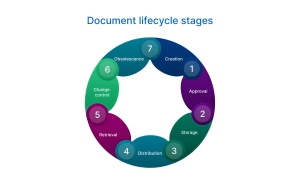
Before any SME moves documents off-site or implements a new retention policy, the most useful exercise is a document lifecycle audit. This does not need to be complicated. It works by sorting documents into four categories:
- Active: Documents in regular use, referenced weekly or monthly. These stay in the office, accessible and organized.
- Dormant but required: Documents no longer referenced day-to-day but legally required for a defined retention period. VAT records, contracts, employee files, corporate tax documentation. These are ideal candidates for structured off-site storage.
- Dormant and discretionary: Documents that have no legal retention requirement and are kept by habit rather than necessity. These should be reviewed, and most can be disposed of securely.
- Overdue for disposal: Documents past their retention period that are still taking up space. These require secure destruction, not continued storage.
Running an office through this framework takes a few hours but typically surfaces the structure of a genuine retention policy where none existed before. Most SMEs find that a significant portion of their physical document volume falls into the third and fourth categories, and the actual archive requiring long-term storage is smaller than expected.
Office space is too expensive for document storage
Prime commercial rents across Dubai have risen sharply. In the districts where SMEs most commonly operate, TECOM, JLT, Business Bay, DIFC, and Dubai Internet City, office space is in genuine short supply and renewal rates are climbing. Using premium office square footage to store archived documents that are never accessed is one of the most easily resolved overhead costs an SME carries.
Structured secure document storage costs a fraction of what the equivalent space costs in a commercial office. The documents remain accessible when needed, properly stored in conditions that protect them from the damage that inadequate office environments frequently cause over time. Heat, humidity, and proximity to water sources are consistent causes of document degradation in Dubai offices, particularly in older buildings or ground-floor units.
For SMEs based in or near the Sheikh Zayed Road corridor, archive storage nearby provides the combination of accessibility and proper conditions that office-based storage rarely achieves.
What a summer document review actually involves
The summer window is genuinely practical for this kind of work because it does not require full team involvement. A business owner or office manager can run the document lifecycle audit, identify what stays and what moves, and arrange collection without disrupting active operations.
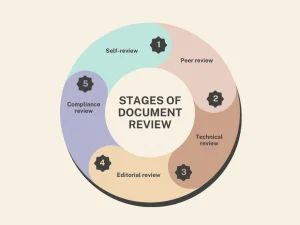
The process for moving documents off-site is straightforward:
- Box and label documents by category and retention period before collection
- Create an index of what is in each box so retrieval is manageable
- Photograph or scan any documents you want immediate digital access to before they go off-site
- Set a calendar reminder for the end of each retention period so disposal happens on schedule rather than by default
None of this requires a consultant or a specialist system. It requires a half-day and a clear decision about which documents belong in the office and which belong in an archive.
Building the habit now rather than later
The SMEs that handle document compliance most effectively are not the ones with the most sophisticated systems. They are the ones that made basic decisions early: what to keep, where to keep it, and for how long. Those decisions, made once and maintained, remove the compliance anxiety that builds up in businesses that never addressed the question.
June is the right moment because the window exists. The audit that takes three hours in June takes three days in October when the market is back at full speed and the business is managing growth again.
For Dubai SMEs looking to clear office space and put their document archive on a structured footing before the summer ends, the team at Storage Space can advise on unit options and business storage arrangements that suit the volume and access requirements involved. Get in touch to discuss what your business needs before Q3 begins.