There is a cost that does not appear on any invoice. It does not show up in a monthly statement or get flagged in a budget review. But it is real, it compounds quietly, and for many businesses in Dubai it represents one of the most consistent sources of unnecessary expenditure in the entire operation.
It is the cost of office space used to store things rather than to work.
A desk that has not been sat at in four months. A storeroom filled with archive boxes from three years ago. A meeting room doubling as overflow for marketing materials, spare IT equipment, and furniture from the last office reconfiguration. None of this looks wasteful at a glance. But when you calculate what each square metre of Dubai office space actually costs, the numbers become hard to ignore.
What Office Space Actually Costs in Dubai

Dubai’s commercial real estate market is not cheap. Office rents across the city’s primary business districts reflect the demand of a genuinely global business hub. In areas like Business Bay, DIFC, and Sheikh Zayed Road, the cost of maintaining office space is a material line in any business budget.
Most businesses calculate their office cost as a single monthly figure and stop there. They do not break it down by how that space is actually being used.
When you apply that breakdown, the result is often uncomfortable. A business paying for 2,000 square feet of office space, of which 400 is genuinely occupied by storage and dormant assets, is effectively paying a premium commercial rate for what functions as a low-grade warehouse. The work that justifies the address is happening in 1,600 square feet. The remaining 400 is overhead masquerading as necessity.
Why This Happens So Consistently
The accumulation is rarely deliberate. It happens through a series of individually reasonable decisions that collectively produce an unreasonable outcome.
A team downsizes but the furniture stays because nobody made a removal decision. A campaign ends but the materials remain in case the next one reuses them. An IT upgrade happens but the old equipment sits in a corner because disposal feels complicated. Archive boxes arrive from a previous move and never get properly sorted.
Each decision, in isolation, makes sense. Together, they gradually colonize the office with assets that have no active purpose in the daily operation of the business.
This pattern is remarkably consistent across Dubai, from startups in Dubai Internet City to established firms in DIFC, regardless of industry or company size. The specific items vary. The dynamic is always the same.
The Space Efficiency Ratio
A useful way to make the invisible cost visible is to apply a simple space efficiency ratio.
Take the total monthly cost of your office space. Divide it by the total usable area. This gives you the cost per unit of space. Then walk the office and estimate, honestly, what proportion is occupied by assets not in active daily use.
Multiply those two numbers and you have a monthly figure representing what your business pays for space that is not supporting productive work.
For many Dubai businesses, this number runs into thousands of dirhams per month. The figure tends to produce a reaction because it converts an abstract inefficiency into a concrete cost that someone can actually do something about.
What Freed Space Actually Enables

The conversation about dormant assets is often framed as a cost-reduction exercise. That framing is accurate but incomplete.
The more interesting question is what happens when that space is freed up and put back to productive use.
Collaboration areas that felt crowded become genuinely functional. Teams physically separated by storage overflow can be consolidated. Client-facing spaces that doubled as stockrooms return to their intended purpose. And in some cases, businesses discover they are paying for more space than their active operation actually requires, which opens a conversation about rightsizing the lease entirely.
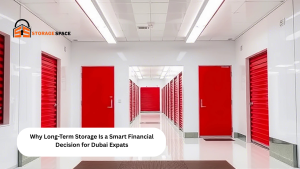
Business storage solutions provide the practical alternative. Assets that have genuine future value but no current daily purpose move offsite into a secure, accessible environment. The office retains what it needs and releases what it does not.
The Categories That Drive Most of the Waste
While every business is different, certain categories of dormant assets appear consistently across Dubai offices.
Office furniture is the most common. Desks, chairs, and meeting room furniture accumulate through headcount changes and reconfigurations. The furniture has value and may be needed again, but storing it at commercial real estate rates is a poor financial decision when office furniture storage is available at a fraction of the cost.
Document archives are the second major category. Most businesses in Dubai are subject to document retention requirements. Keeping those records in prime office space, however, is not a requirement. Secure document storage handles the retention obligation without using expensive commercial space as an archive.
IT and electronics represent a third consistent category. Upgrade cycles leave previous-generation equipment sitting in corners. Devices not in active use but not yet decommissioned occupy space that could serve the business better. Moving this to IT equipment storage in a climate-controlled environment protects the assets and recovers the space simultaneously.
Marketing and event materials round out the picture. Seasonal campaign assets, branded displays, and promotional inventory are used periodically but rarely justify permanent office space.
Summer Is the Right Moment to Act
Dubai’s approaching summer creates a particular window of opportunity. As the city moves into its quieter months, offices run at reduced capacity. The moment to make structural improvements to how space is used is precisely when the disruption of doing so is lowest.
A business that audits its dormant assets in May or early June and moves them offsite arrives at September’s return with a materially better office environment. Teams come back to a space that feels intentional rather than accumulated.
The improvement is felt immediately. The cost saving runs forward for every month that follows.
Quick Wins for Recovering Lost Office Space

If any of this sounds familiar, these are the most effective immediate steps:
- Walk the office and identify every item not actively used in the past 30 days. That list is your starting point.
- Separate storage-function space from working space. Any area that primarily holds assets rather than supporting active work is a candidate for clearance.
- Identify all furniture not assigned to an active team member and calculate the cost of storing it in the office versus moving it offsite.
- Create a simple rule for document archives: anything not accessed in six months moves to offsite secure storage.
- Make a decision on undeployed IT equipment. Store it properly or decommission it. Do not let it occupy commercial real estate indefinitely.
The Mindset Shift That Makes the Difference
The businesses in Dubai that manage physical space most efficiently share a common perspective. They treat office space as a productive asset, not a container.
Every square metre has a cost. The question is whether that cost is generating a return. Workstations generate return. Collaboration areas generate return. Archive boxes and dormant furniture do not.
Making offsite storage a deliberate part of how the business manages its assets, rather than an emergency option used only during moves, is what separates businesses that operate lean from those that quietly accumulate overhead they cannot easily see.
For businesses in Business Bay and the surrounding commercial districts, office solutions nearby offer a practical and accessible way to make this shift without disrupting daily operations.
If your office is carrying more than it should and you want a practical conversation about the right configuration, request a quote and the team will help you work out what makes sense for your space and budget.
The cost of doing nothing is already on the invoice. It is just not labelled.