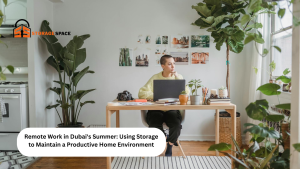
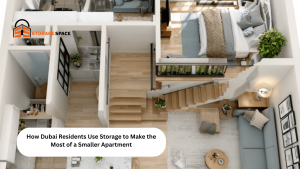
Summer changes how a Dubai home functions. From November to May, apartments and villas serve as a base: somewhere to sleep, eat, and spend evenings. Work happens elsewhere. Social life happens elsewhere. The home is rarely the primary environment for an extended stretch of the day.
In July and August, that changes. Remote and hybrid workers who stay in Dubai through the summer find themselves spending significantly more time at home than at any other point in the year. The outdoor heat removes one alternative. The quieter city removes another. The home, by default, becomes the workspace, the social space, and the recovery space simultaneously and most homes in Dubai were never set up to handle all three at once.
According to a UAE government white paper on remote work cited by The National, a YouGov survey found that around 46 per cent of the UAE population currently works from home in some form. For that portion of Dubai’s workforce, summer is not just a seasonal shift in temperature. It is a test of whether the home environment can actually support sustained, focused work day after day, for weeks at a time.
The summer home office problem
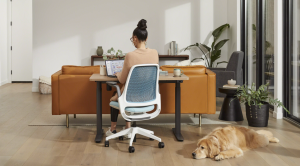
Most home offices in Dubai are functional in winter because they are only used for a few hours a day. A desk in the corner of a bedroom, a dining table that doubles as a workspace, a spare room that is half-office and half-storage these arrangements work well enough when the balance of time is elsewhere.
In summer, the same setup becomes the primary working environment for eight or more hours a day. Problems that were tolerable at low intensity become distracting at full load. The spare room that houses a printer, a few boxes of documents, unused fitness equipment, and a desk becomes difficult to spend a full working day in. The dining table workspace gets interrupted every time someone needs the kitchen. The bedroom desk blurs the line between rest and work in ways that affect both.
The issue is not the apartment’s size. In most cases, it is the distribution of items within it. Spaces that serve as holding areas for things without a clear home have accumulated in the corners of rooms that are now needed for work.
What gets in the way of a functional home office
Before making any changes, it helps to identify what is actually creating the friction. For most Dubai remote workers staying through summer, the culprits fall into recognisable categories:
- Equipment and gear from activities that are on pause for summer: sports kit, outdoor furniture, hobby supplies, exercise equipment that has shifted to an indoor gym.
- Paper and document accumulation: printed files, archived correspondence, materials from previous roles or projects that have never been properly organised or removed.
- IT equipment from previous configurations: old laptops, cables, monitors, or devices that are neither in use nor disposed of.
- General household overflow that has settled into the workspace because no other place was decided on.
None of these categories requires a permanent decision. They require a temporary relocation off-site, accessible, and out of the room that now needs to function properly.
The Clear Space Model
This post introduces a framework for setting up a summer home office that is distinct from the general productivity advice that tends to circulate around remote work. The Clear Space Model is not about desk organisation or morning routines. It is about making the physical environment match the working requirement.
The model works in three steps. The first is a room audit. Walk the intended workspace and identify everything that would not be there in a properly fitted office. Anything that belongs to a different function storage, hobbies, seasonal items, overflow from other rooms is flagged for removal, not reorganisation.
The second step is a category decision for each flagged item. Does it go off-site for the summer? Does it go to another room in the apartment? Does it go permanently? For most remote workers, the majority of items flagged in a home workspace belong off-site. Moving them into remote work storage creates a workspace that is actually clear, rather than tidied.
The third step is a room reset. Once the displaced items are out, the workspace gets arranged for its actual function: desk position, lighting, cable management, and the working equipment that stays. This is the step most people try to do first, which is why it rarely works you cannot arrange a workspace that still has half a storage room in it.
Running the Clear Space Model once at the start of July tends to hold through the whole summer. The workspace has been defined, the displaced items are not creeping back in, and the home can serve its two functions living and working in distinct spaces rather than one compressed one.
Equipment worth protecting properly
Remote workers in Dubai often have a concentration of valuable equipment in the home: monitors, external drives, high-specification laptops, cameras, audio equipment, or specialist kit related to their field. During summer, when apartments run warmer than usual and humidity levels can fluctuate in sealed rooms, this equipment faces conditions it was not designed for.
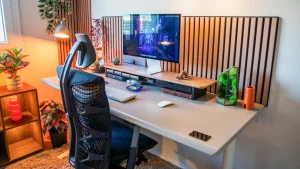
Items that are not in daily use spare monitors, archival hard drives, backup equipment, older devices being kept rather than disposed of are better held in climate-controlled storage than in a home environment through the UAE’s hottest months. The risk of heat damage to electronics is real and largely invisible until the damage has already occurred.
The specific challenge of summer work rhythm in Dubai
There is a psychological dimension to remote work in Dubai’s summer that does not apply in other cities. The heat outside is not merely inconvenient it is genuinely limiting. The usual breaks that punctuate a working day elsewhere, a walk, a coffee outside, a lunchtime errand, become difficult or impossible between late morning and early evening.
This compression of the day into indoor space makes the quality of the home environment more consequential than it would be somewhere with a milder climate. A workspace that feels cluttered or uncomfortable is harder to leave and reset from in Dubai in July than it would be in a city where a twenty-minute walk outside remains an option.
Getting the physical environment right at the start of summer is therefore not a minor adjustment. It is a meaningful investment in three months of sustained productivity.
Practical steps before July progresses further
For remote and hybrid workers currently managing a home setup in communities like JLT, Dubai Marina, or Business Bay, a few actions taken now make the rest of summer easier:
- Clear the primary workspace of everything unrelated to work. If it belongs in another room or off-site, move it now rather than working around it.
- Identify IT equipment and documents that are not in active use and decide where they go. Off-site storage costs less per month than the distraction of a cluttered workspace.
- Protect valuable equipment properly. If something cannot be replaced easily and it is not in daily use, climate-controlled storage is the correct home for it through summer.
- Treat the workspace as a distinct room with a distinct function, regardless of how the apartment is laid out. The boundary matters more when you are in the same environment all day.
For remote workers in Dubai looking to set up a summer home office that actually holds up through the quieter months, business storage options offer a practical starting point. If you want to talk through what makes sense for your setup, request a quote and the team can help you work out the right approach.