The Studio That Outgrows Itself
There is a particular kind of clutter that builds up in creative businesses. It does not happen because the owner is disorganised. It happens because the work demands accumulation.
Every shoot adds something. A new backdrop. A light modifier that solved a specific problem. A lens hired and never returned. Props sourced for a campaign that might come back around. For photographers and videographers working in Dubai, the studio, whether a dedicated space in Al Quoz, a shared facility in a creative hub, or a room in a home, becomes a repository for every project that passed through it.
At some point the space stops serving the work. Shoots take longer to set up because equipment has to be moved before it can be used. Client visits feel cramped. The creative environment that was supposed to inspire starts to feel like a logistics problem.
That is usually when the storage conversation begins.
What a Working Studio Actually Accumulates
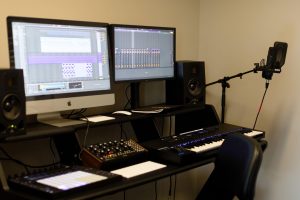
Creative professionals tend to underestimate their own inventory until they are forced to list it. A mid-career photographer or videographer in Dubai is likely managing a combination of the following:
Camera bodies and lenses, lighting rigs including strobes, continuous lights, and portable battery units, light stands and boom arms, modifiers including softboxes, octaboxes, beauty dishes, and reflectors, backdrops in multiple colours and materials with their support systems, grip equipment, cables, and rigging hardware, props from commercial and editorial shoots, branded client deliverables awaiting collection, monitors, hard drives, and editing peripherals, travel and location kit packed separately from studio kit, and audio equipment for video productions.
The volume adds up faster than most people expect. And unlike a retail or office environment where surplus inventory has an obvious category, creative equipment is mixed in value, fragility, and frequency of use. Some of it is needed on every shoot. Some of it has not moved in two years.
The High-Use and Low-Use Framework
The most practical starting point for any creative looking to reclaim studio space is a straightforward audit based on use frequency rather than perceived value.
High-use equipment is what leaves the studio regularly or gets pulled out for most shoots: primary camera bodies, core lenses, the lighting setup used for the majority of work, portable kit for location shoots. This stays in the studio, organised for fast access.
Low-use equipment is everything else: specialist lighting for specific genres that only come up occasionally, excess backdrops beyond a working rotation, duplicate or backup gear kept for contingency, props from past projects, archival hard drives, and travel cases that are only needed before a trip.
The low-use category is almost always larger than creatives expect. And it is the category that, once moved into business storage, immediately transforms how the studio feels and functions.
Why Dubai’s Creative Geography Makes Storage Particularly Relevant

Dubai’s creative industry has a distinct spatial character. The majority of working studios and production companies cluster around Al Quoz Industrial Area, with secondary concentrations in Jumeirah, TECOM, and Dubai Design District.
Al Quoz in particular has become the city’s creative heartland, home to independent photographers, production companies, set builders, and creative agencies. Studio spaces here tend to be warehouses or converted industrial units, which sounds spacious until the equipment accumulation begins. The irony is that studios with more floor area often have more surplus gear, because the space made it easy to keep everything.
Creatives based in or near Al Quoz have a practical advantage: storage for studios and creatives in the same district means retrieval is a short drive, not a logistical event. For professionals whose schedule changes week to week depending on shoot bookings, proximity to stored equipment matters.
Protecting Equipment That Does Not Tolerate Heat
Dubai’s climate is a genuine risk for creative equipment, and it is one that gets underestimated until something fails.
Camera sensors and lens elements are sensitive to humidity variation. Electronic flash units and continuous lights contain components that degrade under sustained heat. Backdrop fabrics fade and distort. Foam padding in cases and modifiers compresses permanently. Adhesives in lighting rigs and equipment mounts loosen.
None of this happens overnight, but a Dubai summer in an unventilated storage space accelerates all of it. Equipment that goes in functional can come out with subtle but real degradation that affects performance and resale value.
For any creative storing camera bodies, lenses, lighting electronics, or sensitive materials, climate-controlled storage is not a luxury consideration. It is the appropriate baseline for what the equipment is worth and what it costs to replace.
The Project Archiving Problem
There is a category of studio accumulation that does not fit neatly into equipment or props: the physical residue of completed projects.
Printed samples and proofing materials. Client-supplied props awaiting return or disposal. Hard copy contracts and delivery documentation. Exhibition prints from past shows. Portfolio pieces too large for standard filing.
Most studios handle this by stacking it in a corner that gradually expands. The better approach is to treat completed project materials the same way a business treats document archiving: periodic, organised, and off-site.
Document and archive storage is not an obvious fit for creative businesses at first glance, but the underlying need is identical. Completed work that needs to be retained but not accessed regularly belongs off-site in organised, accessible storage, not occupying premium studio floor space.
A Storage Cadence for Active Studios

Rather than treating storage as a one-time clearance, the studios that manage space well tend to operate on a regular cadence.
After each major project or campaign, surplus props, hired equipment awaiting return, and project-specific materials are cleared promptly rather than left to accumulate. At the start and end of peak season, which in Dubai roughly aligns with the October to April commercial calendar, equipment rotations are reviewed and low-use items are moved off-site. Annually, a fuller audit identifies anything that has not been used in twelve months and makes a decision: retain in storage, sell, or let go.
This approach keeps the studio functioning as a creative environment rather than a storage facility that also hosts shoots. It is a discipline that pays back in time, focus, and the quality of work produced in a space that is actually set up for it.
The Studio That Works for the Work
The best creative spaces are not the ones with the most equipment. They are the ones where everything present has a purpose, and that purpose is clear.
For photographers and videographers in Dubai, storage is less about having too much and more about being intentional with what the studio holds at any given time. When the space works, the work tends to follow.
If your studio has reached the point where setup time is longer than it should be or client visits feel uncomfortable, the Storage Space team can help you think through what belongs off-site and what the right access arrangement looks like. Get in touch and we will work through it with you.