Running a professional practice without a dedicated office creates a specific kind of friction that traditional employment never produces. There is no IT room. No storeroom. No ops team that handles equipment procurement, maintenance, and disposal. Every piece of kit that a freelancer or independent consultant owns is their own responsibility where it lives, how it is protected, and what happens to it when the project changes.
Dubai’s freelance sector has grown considerably. Freelance registration data shows the UAE recorded a 40 per cent surge in new permits following the introduction of streamlined visa categories in 2024 and 2025, with the city now hosting an estimated 100,000 independent professionals across technology, media, design, consulting, and education. Many of them are working from apartments in JLT, Business Bay, or Dubai Marina, running professional setups from home offices that were never designed to absorb a full inventory of work equipment.
The result is a common problem: capable professionals with no good answer for where their equipment actually belongs.
The equipment problem that builds quietly

A freelance consultant starting out in Dubai acquires equipment gradually. A laptop, a monitor, a decent chair. Then a portable hard drive, a backup device, a second screen for client calls. A consultant who presents regularly adds a projector or a display screen. A creative professional building a client base accumulates cameras, lenses, lighting rigs, audio equipment, and storage drives. A technology specialist carries testing devices, legacy hardware from previous projects, and equipment held for a client retainer.
None of this happens in a single purchase. It accumulates across months and projects, and the equipment that was essential for one engagement often has no clear role in the next. The apartment absorbs it by default onto shelves, into cupboards, under desks until the workspace that was supposed to support focused work is instead managing a minor logistics operation.
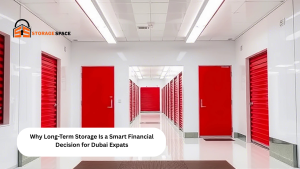
Business storage options address this directly. Moving equipment that is not in active rotation off-site keeps the working environment clean without requiring disposal decisions to be made before they are ready.
What active use actually means
The most useful question a freelancer can ask about any piece of equipment is how often it is genuinely needed. Not how often it might be needed. Not how useful it was six months ago. How often is it actually reached for in a typical working week?
Equipment that answers “daily or weekly” belongs on-site. Equipment that answers “occasionally, for specific project types” is a candidate for accessible off-site storage, retrieved when the project requires it and returned when it does not. Equipment that answers “rarely, but I am not ready to sell it” belongs off-site until that decision becomes clearer.
This distinction matters because the physical presence of unused equipment has a cost that does not appear on a balance sheet. It occupies desk space, mental attention, and the sense of order that a productive home office requires. Professionals working in compact apartments in Barsha Heights or Jumeirah Village Circle feel this more acutely than most every square metre that equipment claims is a square metre the working environment loses.
The Project Load Model
This post introduces a framework specific to the freelance and consulting context: the Project Load Model. Unlike fixed-office professionals whose equipment needs stay relatively stable, independent consultants carry equipment requirements that shift with each engagement. The Project Load Model maps storage decisions to the project cycle rather than to permanent ownership status.
The first phase is the active project load. This is the equipment genuinely in use for current engagements: the primary work devices, the peripherals in daily rotation, the materials for a specific client brief. These items live on-site. They are the operational core.
The second phase is the bench load. These are items retained for project types that come around regularly but are not currently active: specialist cameras for periodic video work, presentation equipment for client pitches, testing hardware for occasional technical projects. These belong in accessible IT storage — near enough to retrieve within a day, but not occupying working space when they are not earning it.
The third phase is the legacy load. Equipment from concluded projects, superseded by newer kit, or held pending a sale or disposal decision. This is the category that most freelancers allow to expand without noticing, until it is occupying a meaningful portion of their working space. Legacy load belongs off-site, reviewed periodically, and resolved when the timing is right.
Running the Project Load Model at the start of each quarter keeps the workspace calibrated to actual workload rather than accumulated history.
A growing sector with a specific infrastructure gap
The expansion of Dubai’s freelance sector has been supported by clear government intent. Free zones including TECOM, SHAMS, and RAKEZ have streamlined permit processes, and the introduction of the Green Visa has given longer residency pathways to established independent professionals. What the framework does not provide is any physical infrastructure for the equipment that professional work requires.
A corporate employee has access to IT support, secure server rooms, and office storage as part of their employment. A freelancer operating under a GoFreelance permit in Dubai Internet City or a TECOM licence has none of that. The support infrastructure for independent professionals in Dubai is well-developed on the administrative and legal side, and almost entirely absent on the physical side.
Storage fills part of that gap, particularly for remote work setups where the home is carrying functions it was not built for.
Climate protection for professional equipment
Dubai’s summer creates a specific risk for electronics and specialist equipment that many freelancers do not factor in until something has already been damaged. A home office that is air-conditioned during working hours may not be maintained at consistent temperature and humidity overnight, in rooms that are sealed, or during periods when the professional is travelling.
Cameras, lenses, hard drives, audio equipment, and specialist displays are all sensitive to temperature fluctuation and humidity. Storing these items in a sealed apartment through a Dubai July and August, particularly if the professional is away for part of the summer, carries real risk that is rarely insured against.
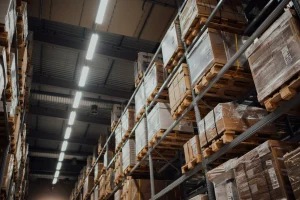
Climate-controlled storage holds equipment at a consistent environment year-round. For freelancers carrying equipment with significant replacement cost, this is the appropriate solution for items not in daily rotation through the summer months.
Practical steps to take before the next project begins
Before the next engagement starts and new equipment requirements add to an already-stretched workspace, a few decisions made in advance simplify what follows:
- Audit the current equipment inventory against the Project Load Model. What is active, what is bench, what is legacy?
- Move legacy load off-site before a new project’s equipment arrives. The workspace should reset between projects, not accumulate across them.
- Identify anything climate-sensitive that will not be in daily use through summer and arrange proper storage before July progresses further.
- Treat storage as part of the operational budget, not a personal expense. For a freelancer, it functions as the infrastructure cost that an employer would otherwise provide.
- Review the bench load quarterly. Equipment that has been in storage across two review cycles without being retrieved is likely ready for a disposal decision.
Running lean without running short
The freelancers and independent consultants in Dubai who manage their working environments most effectively tend to share one approach: they draw a clear line between what the workspace carries and what they own. The workspace carries only what is currently earning. Everything else is stored, accessible, and retrieved when needed.
That line does not require a large storage footprint or a significant monthly outlay. For most freelancers, a small unit near their community covers the bench load and legacy equipment comfortably. What it does require is the decision to draw the line in the first place, rather than letting the workspace absorb whatever has no other home.
For independent professionals in Dubai looking to set up a working arrangement that stays functional as the project mix evolves, storage solutions for freelancers offer a practical starting point. If you want to work out what makes sense for your current setup, request a quote and the team can walk you through the options.